
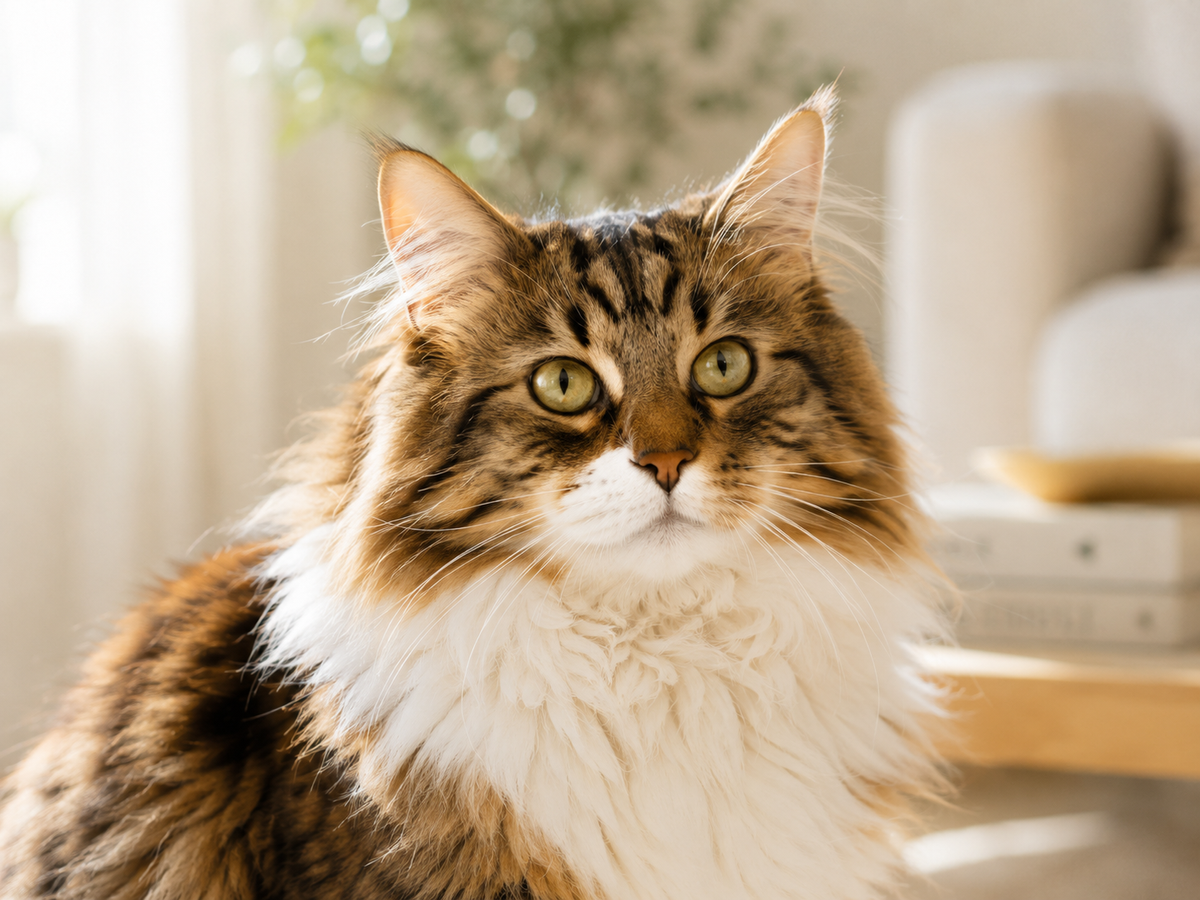
Dual antiviral FIP treatment combines GS-441524 and EIDD-1931 in a single daily capsule, usually after a cat is stable on injections, to give the recovery journey two complementary antiviral actions at once. A dual-antiviral field study (Li and Cheah 2025) reported a 78.3% remission rate for this combination. Always work with your veterinarian to decide if it is the right step for your cat.
If your cat has been diagnosed with Feline Infectious Peritonitis (FIP), you are not the first to face this, and the odds today are better than they have ever been. Since 2019, more than 100,000 cats have been treated with GS-441524 based therapy. Below, we walk you through how the dual antiviral approach works, who it suits, and how Malaysian families can plan a treatment path they can trust.
What is dual antiviral therapy for FIP?
Dual antiviral therapy for FIP is a treatment that combines two antivirals, GS-441524 and EIDD-1931, in one capsule taken once a day. GS-441524 is the long-trusted FIP antiviral, while EIDD-1931 is a different, highly potent antiviral. Using both together gives the virus two fronts to fight on at the same time.
Think of it as a tag team. GS-441524 has the longest track record in feline medicine. EIDD-1931 adds extra potency. The BasmiFIP Dual Antiviral capsule delivers both in measured amounts so you do not have to manage two separate products.
FIP itself comes in four forms: wet (effusive), dry (non-effusive), neurological, and ocular. Neurological and ocular FIP are two separate forms, not one. This matters a great deal when choosing between injections, single oral antivirals, and the dual capsule, as you will see below.
Why combine GS-441524 and EIDD-1931?
GS-441524 and EIDD-1931 are combined because they attack the virus in complementary ways, which can support a stronger and more stable response in cats that need extra help. EIDD-1931 is roughly 7.3 times more potent than GS-441524 and up to 10 times more potent than molnupiravir, so even a small amount adds meaningful antiviral pressure.
Many families ask why they would not simply increase the GS-441524 dose. The answer is that two different mechanisms can be more useful than more of a single one, especially in cats that have been on treatment for a while. By pairing the well-established GS-441524 with the high-potency EIDD-1931, the dual capsule aims to keep the virus suppressed while your cat continues to heal.
Here is how the BasmiFIP antiviral options compare.
| Option | Form | Best for | Key note |
|---|---|---|---|
| GS-441524 injectable | Daily injection, 40 mg/ml, 8 ml vial | All four FIP forms, including ocular and neurological | Wet 6 mg/kg, dry 8 mg/kg, ocular 10 mg/kg, neurological 10 mg/kg |
| EIDD-1931 capsules | Oral, 15 mg per capsule | Wet and dry FIP only | Not for ocular or neurological FIP, or cats not eating or pooping normally |
| Dual Antiviral capsule | Oral, GS-441524 plus EIDD-1931, 1 capsule daily | Stable cats stepping down from injections | Not during ocular or neurological symptoms, vomiting, or diarrhea |
When should a cat switch to the dual antiviral capsule?
A cat should switch to the dual antiviral capsule after about 30 days of GS-441524 injections, or once the cat is stable, as judged by your veterinarian. The capsule is an oral step-down option, not usually the first thing a newly diagnosed cat starts on.
The logic is simple. Injections give strong, reliable control in the critical early weeks. Once your cat is eating well, gaining weight, and showing steady improvement, an oral capsule can make daily dosing far easier on both of you. For many Malaysian Pawrents, moving from daily injections to one capsule a day is a welcome relief.
The dual antiviral capsule is not suitable in these situations:
- During active ocular or neurological FIP symptoms
- While a cat is vomiting or has diarrhea
- For cats under 1 year of age with wet FIP
- For pregnant, nursing, or breeding cats, because EIDD-1931 is potentially teratogenic
If any of these apply, your veterinarian will keep your cat on the appropriate GS-441524 injectable protocol instead.
How is the dual antiviral capsule dosed by weight?
The BasmiFIP Dual Antiviral capsule is given as 1 capsule per day, with the strength chosen by your cat's body weight. Each capsule contains a fixed combination of GS-441524 and EIDD-1931.
| Cat weight | GS-441524 per capsule | EIDD-1931 per capsule | Frequency |
|---|---|---|---|
| Under 2.5 kg | 25 mg | 5 mg | 1 capsule per day |
| 2.5 to 5 kg | 35 mg | 8 mg | 1 capsule per day |
| Over 5 kg | 50 mg | 10 mg | 1 capsule per day |
Weigh your cat regularly during treatment. Cats often gain weight as they recover, so the right capsule strength can change over the weeks. Your veterinarian will confirm the correct band and adjust as your cat grows stronger.
What does the full FIP treatment journey look like?
The standard FIP protocol runs for 84 days, which is 12 weeks. The dual antiviral capsule is one stage within that journey, not a shortcut that replaces the full course. Here is how a typical path can unfold for wet or dry FIP without ocular or neurological signs.
- Diagnosis. Your veterinarian confirms FIP and identifies the form. There is a clear path forward, and it starts with the right diagnosis.
- Early control. For ocular or neurological FIP, or cats not eating and pooping normally, treatment begins with GS-441524 injections at 10 mg/kg for about 30 days.
- Step-down. Once your cat is stable, your veterinarian may switch to the GS-441524 dual antiviral capsule for easier daily oral dosing.
- Continued treatment. Dosing continues to complete the full 84-day course. Stopping early risks relapse.
- Observation. After the course, your veterinarian guides a monitoring period to confirm remission.
For wet or dry FIP without ocular or neurological signs, some families may start with EIDD-1931 capsules for 30 days, extend if symptoms persist, and if symptoms continue past 60 days, switch to GS-441524 at 10 mg/kg. Your veterinarian will tailor the plan to your cat.
How effective is the GS-441524 and EIDD-1931 combination?
The dual-antiviral field study by Li and Cheah (2025) reported a 78.3% remission rate for the GS-441524 plus EIDD-1931 combination. For context, the general GS-441524 figure from the UC Davis clinical trial is a 92% success rate. These are two separate numbers from two separate studies and should not be mixed.
What these figures tell you is that FIP, once considered hopeless, is now highly treatable. The success rate speaks for itself, and tens of thousands of families have walked this road before you. No responsible product can promise an outcome for any single cat, which is why veterinary supervision and completing the full course matter so much.
What should Malaysian Pawrents know about advanced FIP treatment?
Malaysian Pawrents pursuing advanced FIP treatment should plan for a full 84-day course, work with a veterinarian who is comfortable guiding FIP cases, and weigh their cat regularly to keep dosing accurate. BasmiFIP is built to be accessible and affordability-aware for families across Southeast Asia, without cutting corners on safety.
A few practical tips for the journey:
- Keep a daily log. Note appetite, energy, weight, and temperature. Patterns help your veterinarian fine-tune the plan.
- Do not stop early. Cats often look fully recovered before the 84 days are complete. Finishing the course protects against relapse.
- Avoid certain interactions. During FIP treatment, avoid fluoroquinolone antibiotics, spot-on flea medications, lysine, and immune boosters, unless your veterinarian directs otherwise.
- Lean on community. FIP support groups across Malaysia are full of Pawrents who have been where you are now.
Can supportive supplements help during FIP treatment?
Supportive nutraceuticals like LiverRx and KidneyRx may be used as adjunct organ support alongside veterinary-guided antiviral treatment, but they are not antivirals and do not treat FIP. They are there to support organ health while the antivirals do the work against the virus.
LiverRx for cats and small dogs provides SAMe 90 mg, Silybin A and B (milk thistle) 9 mg, Vitamin E 13 mg, and Vitamin C 10 mg, in a 30 tablet pack. KidneyRx for cats and dogs provides ingredients such as Omega-3 50 mg, L-Carnitine 25 mg, and Cranberry extract 25 mg, in a 60 tablet pack. Ask your veterinarian whether either fits your cat's needs. They never replace GS-441524 or EIDD-1931 antiviral therapy.
FAQ
Is the dual antiviral capsule the first treatment a cat with FIP should take?
Usually no. The dual antiviral capsule is generally used after about 30 days of GS-441524 injections or once your cat is stable. Most cats start with injections for strong early control, then step down to the oral capsule under veterinary guidance.
Can the dual antiviral capsule be used for ocular or neurological FIP?
No. The dual antiviral capsule should not be used during active ocular or neurological FIP symptoms. These two forms are treated with GS-441524 injections at 10 mg/kg, and your veterinarian decides when any oral step-down is appropriate.
What remission rate has the GS-441524 and EIDD-1931 combination shown?
The dual-antiviral field study by Li and Cheah (2025) reported a 78.3% remission rate for the GS-441524 plus EIDD-1931 combination. The separate general GS-441524 figure from the UC Davis clinical trial is a 92% success rate.
Is the dual antiviral capsule safe for pregnant or nursing cats?
No. EIDD-1931 is potentially teratogenic, so the dual antiviral capsule must never be used in pregnant, nursing, or breeding cats. Speak with your veterinarian about a suitable alternative for these cats.
How long does the full FIP treatment course last?
The standard FIP protocol runs for 84 days, which is 12 weeks. Completing the full course, even after your cat looks well, helps protect against relapse and supports lasting remission.